
Cargando ficha científica…
Cargando ficha científica…
Hemopericardium is an alteration characterized by the accumulation of blood inside the pericardial cavity, a space that normally contains a small amount of serous fluid to facilitate cardiac movement. This condition may produce progressive compression of the heart, known as cardiac tamponade, compromising the circulatory function of the animal. This report describes the case of an adult bovine in which, during anatomopathological evaluation through necropsy, blood accumulation was observed in the pericardial sac associated with cardiac alterations. The macroscopic examination showed the presence of blood content within the pericardial cavity, accompanied by changes compatible with a cardiovascular disorder. The finding of hemopericardium represents an important clinical lesion due to its effects on cardiac function and animal survival.
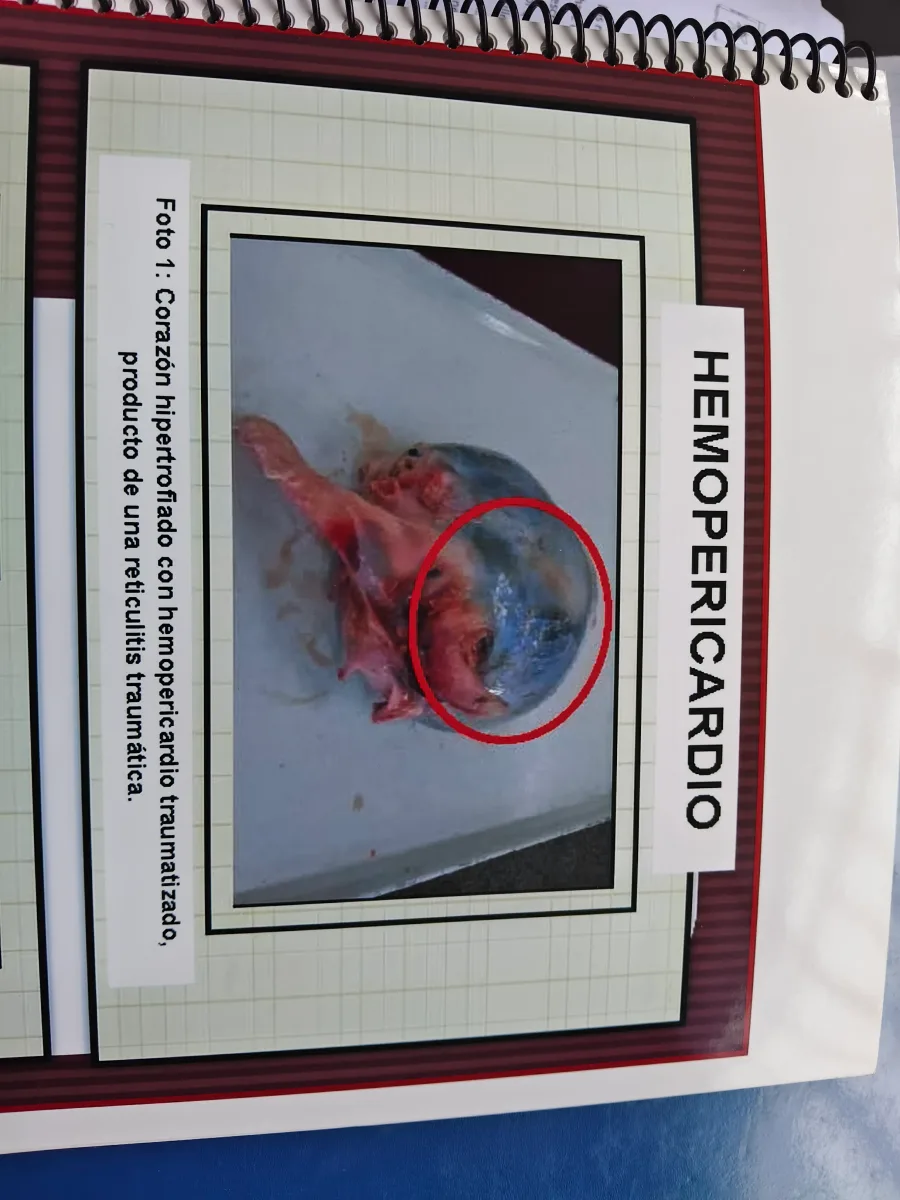
Hemopericardium is an alteration characterized by the accumulation of blood inside the pericardial cavity, a space that normally contains a small amount of serous fluid to facilitate cardiac movement. This condition may produce progressive compression of the heart, known as cardiac tamponade, compromising the circulatory function of the animal. This report describes the case of an adult bovine in which, during anatomopathological evaluation through necropsy, blood accumulation was observed in the pericardial sac associated with cardiac alterations. The macroscopic examination showed the presence of blood content within the pericardial cavity, accompanied by changes compatible with a cardiovascular disorder. The finding of hemopericardium represents an important clinical lesion due to its effects on cardiac function and animal survival.
Keywords: Bovine, hemopericardium, heart, pericardium, necropsy, cardiac tamponade.
El corazón es un órgano esencial del sistema circulatorio encargado de mantener el flujo sanguíneo hacia todos los tejidos del organismo. Se encuentra protegido por una estructura denominada pericardio, formada por una capa fibrosa y una capa serosa que permiten el movimiento cardíaco normal mediante una pequeña cantidad de líquido lubricante.
El hemopericardio se define como la presencia anormal de sangre dentro de la cavidad pericárdica. Esta acumulación puede producirse por ruptura de vasos sanguíneos, traumatismos, lesiones cardíacas, alteraciones vasculares, enfermedades infecciosas o procesos degenerativos que afectan la estructura del corazón.
Acumulación de sangre dentro del saco pericárdico.
El aumento de presión pericárdica puede restringir el llenado cardíaco y producir taponamiento; el efecto depende también de la velocidad de acumulación.
El hemopericardio es una lesión, no una causa etiológica única. No todo derrame pericárdico produce taponamiento.